Modern businesses face a simple reality: adapt quickly or risk falling behind. Markets move faster than ever, customer expectations keep rising, and technology continues to reshape how organizations operate. That’s where Truzio enters the conversation.
As companies invest in Digital Transformation, they are looking for practical ways to improve operations, automate repetitive work, strengthen customer relationships, and build sustainable growth. Rather than viewing technology as a collection of separate tools, organizations increasingly seek integrated Smart Business Solutions that connect people, processes, and data.
In this guide, you’ll learn what Truzio represents, how modern Business Technology supports organizational growth, and why digital transformation remains one of the most important business priorities in 2026.
What Is Truzio?
At its core, Truzio is associated with the growing movement toward Technology-Enabled Solutions that help businesses modernize operations and improve performance. Organizations today need more than standalone software. They need connected systems that support decision-making, automation, collaboration, and customer engagement.
The concept behind Truzio aligns closely with building a comprehensive Digital Ecosystem where business functions work together instead of operating in isolation. Sales teams, finance departments, operations managers, and customer support representatives all benefit when information flows seamlessly across the organization.
In 2026, companies no longer view digital tools as optional upgrades. They see them as critical components of long-term competitiveness. Whether the goal is improving efficiency, reducing costs, or creating better customer experiences, platforms and services connected to digital transformation help businesses move forward with confidence.
Understanding the Truzio Platform
Businesses often struggle with disconnected software, manual workflows, and fragmented data. A modern digital platform addresses those challenges by creating a centralized environment for managing operations.
Instead of maintaining separate systems for communication, reporting, customer records, and financial tracking, organizations increasingly rely on integrated Digital Platforms that bring everything together. This unified approach improves visibility while reducing administrative complexity.
The result is a more connected business environment where leaders can make decisions based on accurate, real-time information rather than outdated reports.
Truzio’s Mission and Business Approach
The broader mission behind solutions like Truzio centers on Business Optimization. Technology should simplify work rather than create additional complexity.
Successful digital transformation focuses on solving real business problems. That might involve reducing processing times, improving collaboration, streamlining customer interactions, or enabling better reporting.
Rather than adopting technology for its own sake, organizations use modern solutions to support measurable outcomes such as Operational Efficiency, revenue growth, and enhanced customer satisfaction.
How Truzio Supports Digital Transformation
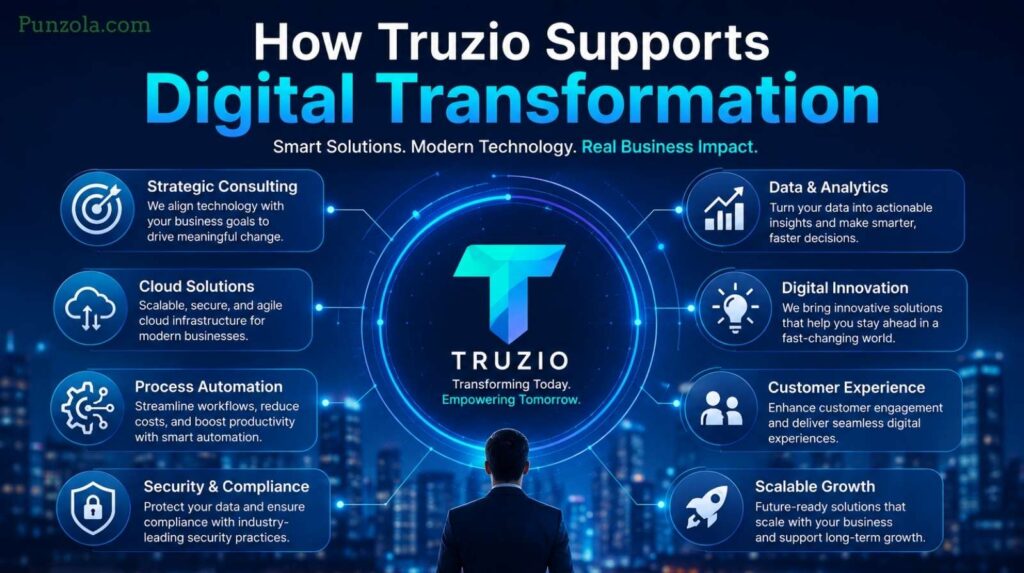
Digital transformation isn’t a single project. It’s an ongoing process that helps organizations evolve alongside changing market demands.
Businesses often begin by identifying bottlenecks that slow productivity. From there, they introduce technologies that automate routine work, improve communication, and strengthen decision-making capabilities.
The goal isn’t simply to digitize existing processes. Instead, companies redesign workflows to create smarter, faster, and more scalable operations.
End-to-End Digital Modernization
One of the biggest advantages of modern digital solutions is their ability to support transformation across multiple departments simultaneously.
Organizations can implement Workflow Automation, automate reporting processes, integrate cloud systems, and improve data accessibility without disrupting daily operations. These improvements reduce friction and create a more agile working environment.
As businesses grow, scalable digital systems become increasingly important. A solution that works for ten employees should also support hundreds or thousands without requiring a complete overhaul.
Bridging Technology and Business Goals
Technology investments succeed when they align with strategic objectives. The best initiatives connect digital capabilities with measurable business outcomes.
For example, a retailer might focus on improving inventory accuracy. A healthcare provider may prioritize patient communication. A manufacturer could concentrate on production efficiency.
By connecting technology initiatives directly to business goals, organizations create stronger returns on investment while accelerating long-term growth.
Also Read: VocalNewsMedia Com: A Complete Guide to the Popular Online Content Platform
Why Digital Transformation Matters More Than Ever in 2026
The pace of change continues to accelerate. Customers expect instant responses, personalized experiences, and seamless interactions across every touchpoint.
At the same time, competitors are leveraging advanced technologies to improve efficiency and reduce costs. Organizations that delay modernization often find themselves struggling to keep up.
Digital transformation helps businesses remain adaptable, resilient, and prepared for future challenges.
Rising Customer Expectations
Today’s customers want convenience. They expect fast service, personalized recommendations, and real-time updates.
Businesses can meet these expectations through modern Customer Experience technologies, automated communication systems, and intelligent service platforms. These tools help companies deliver consistent experiences across websites, mobile apps, and support channels.
When organizations provide smoother interactions, customer loyalty tends to increase naturally.
Competitive Pressure Across Industries
Every industry now faces digital disruption. Traditional business models continue to evolve as innovative companies introduce new ways to serve customers.
Organizations that embrace Digital Innovation gain a stronger Competitive Advantage because they can respond more quickly to changing market conditions.
Those that resist change often encounter slower growth, rising operational costs, and declining customer engagement.
Data as a Strategic Asset
Data has become one of the most valuable business resources available today.
Modern Data Management systems allow organizations to transform raw information into actionable insights. Rather than relying on assumptions, leaders can use analytics to identify trends, predict outcomes, and improve decision-making.
This shift toward Data-Driven Decision Making has become a defining characteristic of successful organizations.
Key Solutions Associated With Truzio
Businesses pursuing digital transformation typically focus on several core technology areas. Together, these solutions create the foundation for sustainable growth and operational excellence.
Business Process Automation
Manual work consumes time, introduces errors, and limits scalability. That’s why Business Automation Systems continue to gain momentum across industries.
Organizations use Process Automation to streamline tasks such as:
- Invoice processing
- Employee onboarding
- Order tracking
- Customer support requests
- Automated reporting
By reducing repetitive activities, teams can focus on higher-value work that drives growth.
Cloud-Based Infrastructure Solutions
The shift toward Cloud Computing has transformed how businesses manage technology.
Traditional server environments often require significant maintenance and capital investment. Modern Cloud Infrastructure offers flexibility, scalability, and lower infrastructure costs.
With Remote Data Access, employees can work efficiently regardless of location. This flexibility has become particularly valuable in hybrid and distributed work environments.
Data Analytics and Reporting
Organizations generate enormous amounts of information every day. Without proper analysis, much of that value remains untapped.
Advanced Business Analytics platforms provide visibility into sales performance, customer behavior, operational trends, and financial metrics.
Through Smart Analytics and Predictive Analytics, companies can anticipate challenges before they become major problems.
Customer Experience Technologies
Customer loyalty increasingly depends on digital interactions.
Organizations use Customer Relationship Management systems, communication platforms, and personalized service tools to strengthen relationships and improve engagement.
Features such as real-time updates, intelligent recommendations, and self-service portals contribute to better overall customer experiences.
Enterprise Software Integration
Disconnected software creates inefficiencies throughout an organization.
Modern Enterprise Software integration connects departments through a centralized platform. Financial records, inventory data, employee information, and sales activities remain synchronized across the business.
This unified approach reduces duplication while improving collaboration and visibility.
Core Technologies Driving Truzio’s Solutions
Digital transformation depends on several foundational technologies that work together to create smarter business environments.
Artificial Intelligence and Machine Learning
Artificial Intelligence (AI) continues to reshape modern business operations.
Organizations use AI Integration for intelligent recommendations, forecasting, customer support, and operational analysis. Machine Learning systems continuously improve by identifying patterns within large datasets.
Applications include:
- Chatbots
- Recommendation engines
- AI search systems
- Predictive analytics systems
- Automated reporting systems
These technologies help businesses make faster and more accurate decisions.
Cloud Computing
Cloud technology remains the backbone of many digital transformation initiatives.
Modern Cloud Solutions provide businesses with secure access to software, storage, analytics, and communication tools through scalable digital environments.
As organizations expand, cloud-based infrastructure makes growth significantly easier to manage.
Advanced Analytics
Data alone isn’t enough. Businesses need tools that transform information into meaningful insights.
Advanced analytics platforms help organizations evaluate operational performance, identify growth opportunities, and monitor key business metrics.
Through predictive modeling and trend analysis, leaders gain a clearer understanding of future possibilities.
Internet of Things (IoT)
Connected devices continue to influence industries such as manufacturing, logistics, healthcare, and retail.
IoT systems collect operational data in real time, helping organizations monitor equipment performance, optimize supply chains, and improve asset management.
This continuous flow of information supports faster responses and more informed decision-making.
Cybersecurity Frameworks
As businesses become increasingly digital, security becomes even more important.
Strong Cybersecurity strategies include:
- Access controls
- Fraud protection systems
- Encryption technologies
- Backup systems
- Compliance frameworks
Organizations that prioritize Data Protection reduce risks while building trust with customers and stakeholders.
Business Benefits of Adopting Smart Digital Solutions
Technology investments must produce measurable value. Fortunately, modern digital solutions deliver benefits that extend well beyond operational improvements.
Improved Operational Efficiency
One of the most immediate advantages is greater efficiency.
Automation reduces manual effort while integrated systems eliminate unnecessary duplication. Employees spend less time searching for information and more time focusing on productive activities.
These improvements often generate noticeable results within a relatively short period.
Faster Decision-Making
Business leaders need accurate information to make informed decisions.
Modern analytics platforms provide real-time visibility into operations, allowing managers to identify opportunities and respond to challenges quickly.
Faster access to reliable information often leads to stronger business outcomes.
Reduced Operating Costs
Digital systems frequently reduce costs by automating labor-intensive tasks and optimizing resource allocation.
Organizations can lower administrative expenses, improve accuracy, and minimize operational waste.
Over time, these efficiencies contribute to stronger profitability.
Enhanced Customer Satisfaction
Customers appreciate convenience, speed, and personalization.
Businesses that invest in modern digital experiences often see improvements in customer engagement, retention, and satisfaction.
Small improvements in service quality can have a significant impact on long-term customer loyalty.
Increased Business Agility
Market conditions change rapidly.
Organizations with modern digital infrastructure can adapt more easily to shifting customer demands, emerging opportunities, and unexpected disruptions.
That flexibility often becomes a key competitive differentiator.
Also Read: Coolkingzone com: Why This Multi-Topic Digital Platform Is Getting Attention Online
Industry Applications of Truzio and Digital Transformation
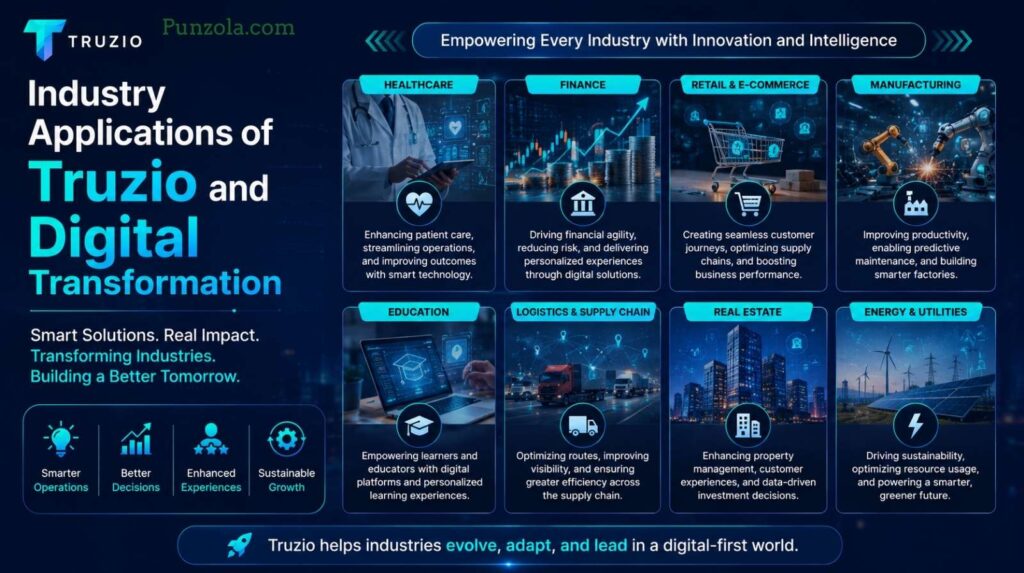
Digital transformation affects nearly every sector of the economy. While implementation varies, the underlying goals remain remarkably similar.
Healthcare
Healthcare providers use digital systems to improve patient care, streamline administration, and strengthen communication.
Electronic records, appointment scheduling platforms, and telehealth solutions help organizations deliver better outcomes while improving efficiency.
Data-driven healthcare environments also support more informed clinical decision-making.
Financial Services
Banks and financial institutions rely heavily on automation, analytics, and security technologies.
Digital onboarding processes, fraud detection systems, and intelligent customer service platforms improve both efficiency and customer experience.
Strong security measures remain especially important in highly regulated environments.
Retail and E-Commerce
Retailers use digital platforms to manage inventory, personalize customer interactions, and optimize supply chains.
Modern E-Commerce Platforms combine analytics, automation, and customer engagement tools to create seamless shopping experiences.
Consumers increasingly expect personalized recommendations and real-time order tracking.
Manufacturing
Manufacturers continue to adopt smart technologies that improve production performance and reduce downtime.
Connected devices, predictive maintenance systems, and automation tools help organizations increase output while controlling costs.
These technologies also improve visibility across complex production environments.
Logistics and Transportation
Digital transformation has revolutionized logistics operations.
Route optimization systems, fleet tracking solutions, and real-time analytics enable organizations to improve delivery performance and resource utilization.
Customers benefit from greater transparency throughout the shipping process.
Professional Services
Consulting firms, agencies, and service providers use digital tools to manage projects, track performance, and enhance client communication.
Centralized management systems simplify collaboration while improving operational efficiency.
The result is often better service quality and stronger client relationships.
Common Challenges Businesses Face During Digital Transformation
Although digital transformation offers significant benefits, implementation isn’t always straightforward.
Organizations often encounter obstacles that require careful planning and strategic leadership.
Legacy Systems and Technical Debt
Many companies still depend on aging software that wasn’t designed for modern business requirements.
Integrating legacy infrastructure with newer technologies can be challenging. In some cases, organizations must gradually replace outdated systems while maintaining business continuity.
A phased approach typically reduces disruption.
Employee Resistance to Change
People naturally become comfortable with familiar processes.
When organizations introduce new technologies, employees may worry about learning curves or job security. Clear communication and training programs help reduce uncertainty while encouraging adoption.
Successful transformation focuses on people just as much as technology.
Data Security Concerns
As digital ecosystems expand, organizations must protect increasing volumes of sensitive information.
Cybersecurity planning should begin early in the transformation process. Strong governance, encryption, monitoring, and compliance measures help reduce potential risks.
Security should never become an afterthought.
Best Practices for Successful Digital Transformation
Organizations that achieve lasting success tend to follow a few common principles.
Define Clear Business Objectives
Technology should support strategic goals rather than exist as a standalone initiative.
Leaders should identify specific outcomes such as improving efficiency, increasing revenue, reducing costs, or enhancing customer experiences.
Clear objectives make it easier to measure progress and prioritize investments.
Invest in Employee Training
Even the best software cannot succeed without user adoption.
Organizations should provide training, support resources, and ongoing guidance to help employees adapt confidently to new systems.
Well-trained teams maximize the value of digital investments.
Measure Results Continuously
Transformation isn’t a one-time event.
Businesses should monitor key performance indicators, analyze results, and refine processes as conditions change.
Continuous improvement helps organizations remain competitive in rapidly evolving markets.
How to Evaluate Whether Truzio Is Right for Your Organization
Before investing in digital transformation, businesses should assess their current needs and future objectives.
Every organization faces unique challenges, so the right approach depends on operational requirements, industry demands, and growth plans.
Leaders should begin by identifying inefficiencies, technology gaps, and opportunities for improvement. Understanding these areas creates a clearer roadmap for implementation.
It is also important to evaluate scalability. A solution that supports current operations should also accommodate future growth without requiring constant redevelopment.
Organizations that approach transformation strategically often achieve stronger long-term returns.
Also Read: Unbanned G+ Explained: Why This Unblocked Gaming Trend Is Growing So Fast
Digital Transformation Trends Shaping 2026
Technology continues to evolve at a remarkable pace. Several trends are influencing how organizations approach digital modernization.
AI-Powered Business Operations
Businesses increasingly rely on AI-Powered Business Solutions to automate decisions, analyze data, and improve customer interactions.
Artificial intelligence is no longer limited to large enterprises. Smaller organizations now have access to advanced capabilities through cloud-based platforms and SaaS solutions.
This accessibility continues to accelerate adoption across industries.
Hyperautomation
Hyperautomation combines multiple technologies to automate complex workflows.
Instead of automating isolated tasks, organizations automate entire business processes from beginning to end.
This approach increases efficiency while reducing manual intervention.
Low-Code and No-Code Development
Development platforms continue to become more accessible.
Technologies such as Flutter and React Native support faster application development, while low-code environments allow organizations to build solutions with fewer technical resources.
This trend helps businesses innovate more quickly.
Intelligent Data Platforms
Modern organizations need unified access to information.
Intelligent platforms combine analytics, automation, and data management capabilities within centralized environments. These systems improve visibility while supporting more informed decisions.
Data-driven organizations consistently outperform competitors that rely on fragmented information.
The Future of Smart Business Technology
The future of Modern Business Technology points toward deeper integration, greater automation, and more intelligent decision-making.
Businesses will increasingly rely on connected digital ecosystems that combine cloud infrastructure, AI capabilities, advanced analytics, and automation tools within unified environments.
As these technologies mature, organizations will gain unprecedented visibility into operations, customer behavior, and market opportunities.
The companies that embrace innovation thoughtfully will likely enjoy stronger growth, greater agility, and improved resilience in an increasingly digital economy.
Frequently Asked Questions
What is Truzio?
Truzio is associated with modern Digital Transformation Services and Smart Business Solutions that help organizations improve efficiency, automate operations, and leverage technology for growth.
How does Truzio support digital transformation?
It supports transformation through technologies such as Cloud Computing, Business Automation, analytics, enterprise software integration, and customer experience improvements.
Which industries can benefit from Truzio solutions?
Industries including Healthcare, finance, manufacturing, retail, logistics, education, SaaS businesses, and startups can benefit from digital transformation initiatives.
What role does artificial intelligence play?
Artificial Intelligence, Machine Learning, predictive analytics systems, and intelligent automation help organizations improve decision-making, customer engagement, and operational performance.
Why is cybersecurity important during digital transformation?
As businesses digitize operations, they handle larger amounts of sensitive data. Strong Cybersecurity, Data Protection Systems, and compliance frameworks help reduce risks and maintain trust.
Can small businesses benefit from digital transformation?
Absolutely. Modern cloud-based platforms and SaaS solutions make advanced technology accessible to organizations of all sizes. Small businesses often achieve significant gains in efficiency and scalability through strategic digital investments.
Final Thoughts
The conversation around Truzio ultimately reflects a larger shift happening across the global business landscape. Organizations are moving toward smarter operations, connected technologies, and data-driven decision-making.
Whether through Workflow Automation, Cloud Infrastructure, Enterprise Resource Planning (ERP) systems, advanced analytics, or Artificial Intelligence Integration, the goal remains the same: create a more efficient, scalable, and customer-focused organization.
In 2026, digital transformation is no longer just a technology initiative. It’s a business strategy. The organizations that embrace it thoughtfully will be better positioned to thrive in an increasingly competitive and technology-driven world.
Discover More Articles
- WallPostMedia com Review 2026 — The Premium Digital Media And Wall Art Platform That’s Changing How We Decorate
- What Is Erikkapost com? The Honest Guide to Features, Pros And How It Works in 2026
- What Is pixelspinx com? The Honest Deep Dive You Actually Need in 2026
Read more knowledgeable blogs on Pun Zola

Jackson Pearson is a creative humor writer known for crafting clever puns and clean, engaging jokes. Through his blog, he brings lighthearted fun to everyday life, offering readers smart wordplay, relatable humor, and a warm, welcoming voice that makes each visit enjoyable.