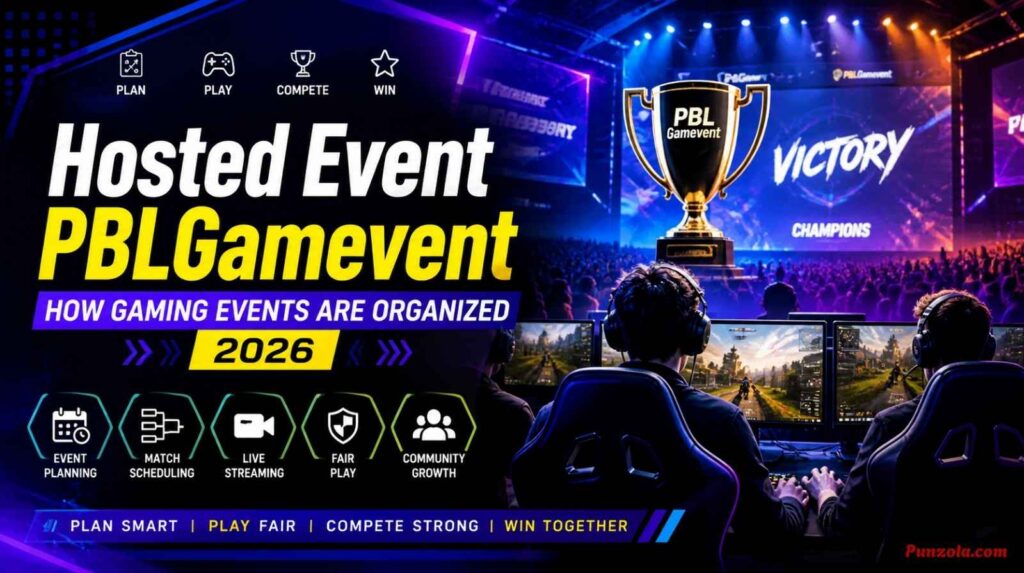
Gaming events feel simple when you’re on the player side. You register, join a lobby, play your match, and watch the stream. That smooth experience can make it look easy. It isn’t. Behind every successful tournament sits a long chain of planning, testing, communication, and live decision-making. That is exactly where Hosted Event PBLGamevent fits in.
In 2026, gaming events are more organized, more competitive, and more global than ever. A few years ago, many community tournaments were small and informal. Today, a modern gaming event often includes professional streaming, automated brackets, moderation teams, sponsorship integration, analytics dashboards, and participants from multiple countries. Players expect reliable execution. They want clear rules, fair competition, stable match scheduling, and immediate support when something goes wrong.
That is why the idea of the online gaming event pblgamevent matters so much now. It is not simply a tournament. It is a structured environment where players compete while organizers manage the infrastructure that keeps the experience fair, smooth, and enjoyable. If you have ever wondered how gaming events actually work behind the scenes, this guide explains it in clear and practical terms.
What Is Hosted Event PBLGamevent?
A hosted event pblgamevent is a gaming event managed by a dedicated organizer. That organizer may be a publisher, esports company, community group, tournament platform, creator network, or gaming brand. The host is responsible for building the framework of the event so players can focus on playing.
Think of it this way. A pickup basketball game happens when people simply show up and play. A professional tournament needs referees, schedules, rules, venue staff, and scorekeepers. Gaming works the same way.
In a pblgamevent online gaming event, the organizer usually handles registration, event guidelines, tournament structure, match scheduling, technical infrastructure, player support, moderation, score tracking, and winner announcement. Without those pieces, even a promising event can fall apart quickly.
The word “hosted” matters because it signals ownership and accountability. Someone is responsible for keeping the event running. When a player disconnects, when a score dispute appears, or when a stream experiences a delay, the host steps in.
Why Gaming Events Matter More in 2026
The gaming industry has expanded fast. Competitive gaming is no longer a niche activity. It now sits at the center of online entertainment, creator culture, and digital communities. Millions of people watch tournaments every week. Publishers use events to launch titles, creators use them to engage audiences, and communities use them to strengthen identity.
That growth changed expectations.
Players no longer tolerate confusing brackets, delayed communication, or vague rule enforcement. In 2026, people compare community tournaments against professional esports standards. Even smaller organized gaming events now need strong planning and reliable execution.
Gaming events also serve more than one purpose now. Competition still matters, of course. Yet many events also aim to improve community engagement, build loyalty, increase game awareness, support sponsorship goals, and create long-term player retention.
That is one reason online event pblgamevent has become increasingly important. It combines competition with community building.
How Hosted Event PBLGamevent Actually Works
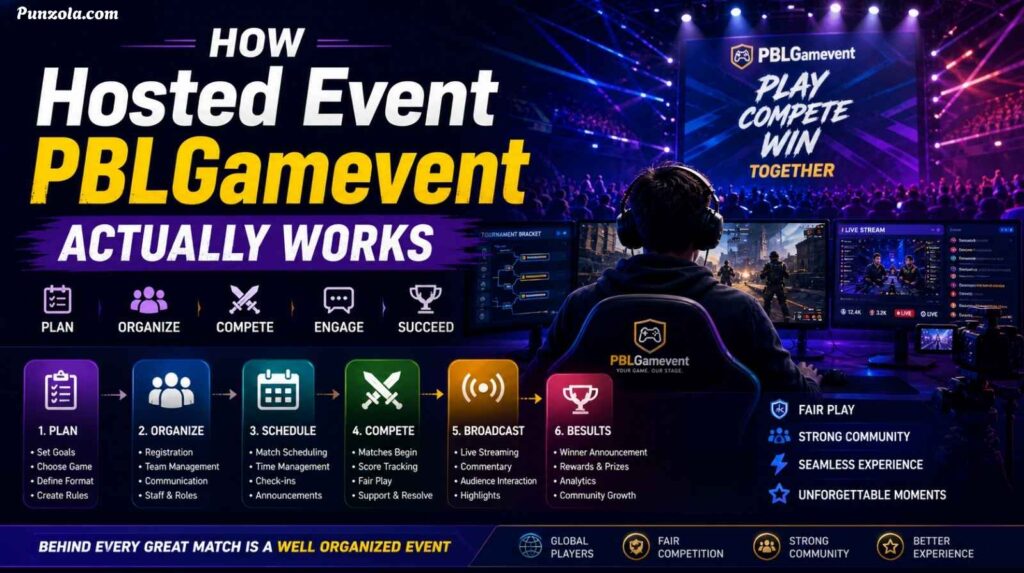
From the outside, a gaming tournament can look straightforward. Players sign up. Matches begin. Winners advance. That’s the visible part.
Behind the scenes, there is a much deeper process.
A successful event usually starts with strategy. Organizers first define the purpose of the event. Is it a competitive game tournament? Is it meant to introduce a new game? Is it a creator-led community event? That decision shapes every other choice.
Next comes event planning. Organizers build registration systems, set timelines, choose tournament formats, prepare rules, assign staff, and create support channels. Before the event goes live, technical teams test systems and moderators review communication procedures.
Then comes live operations. That is where everything happens at once. Players check in, admins launch brackets, moderators handle questions, production teams manage streams, and tournament staff keep matches moving.
After the final match, the work still is not finished. Organizers analyze attendance, review technical issues, measure audience engagement, and study what should improve next time.
A good event feels smooth because a lot of invisible work happened first.
The Structure Behind a Modern Gaming Event
A modern gaming event management team usually includes several roles working together.
An event director oversees the entire operation. This person manages goals, approvals, budget, and final decision-making. If a major issue happens during live play, the event director often makes the final call.
The tournament operations lead focuses on competitive flow. They handle match scheduling, bracket logic, progression rules, and dispute resolution. In many ways, they control the rhythm of the tournament.
Technical operations teams handle systems players may never notice. They check platform integrations, private lobbies, network stability, streaming reliability, and backup systems.
Broadcast production handles the audience-facing layer. They manage commentators, overlays, scene transitions, and live coverage.
Community moderators work on another equally important front. They answer questions, guide participants, enforce fair play, and protect community atmosphere.
When all these parts work together, the event feels organized. When one part fails, players notice quickly.
Why Clear Event Goals Matter
Many weak tournaments start with excitement but no direction.
That usually causes problems later.
Before planning begins, organizers need to answer one simple question. What is the event supposed to achieve?
A gaming competition built for high-level competitive play will look very different from a community-friendly social event. A publisher launch event has different priorities than a grassroots tournament.
Some events focus on competition. Others focus on fun and entertainment. Some aim for learning, player development, or stronger gaming community engagement.
Clear goals affect nearly everything. They shape bracket format, staffing needs, communication style, stream production, and even prize structure.
Without that clarity, planning becomes guesswork.
Understanding the Audience
Knowing who will participate matters just as much as defining the event goal.
Different audiences behave differently.
Casual players usually want simple instructions, clear timing, and low-friction participation. Competitive teams often care more about rule precision, fair play enforcement, and reliable score reporting.
A university tournament may need structured communication and fixed time windows. A creator-led community event may need flexible participation and social interaction.
Organizers often ask practical questions early. What region are players in? What platforms do they use? What skill level should the event support? What time zones matter?
That early research makes later planning far easier.
Choosing the Right Tournament Format
Tournament structure shapes player experience more than many new organizers expect.
A poor format can make even a strong event feel frustrating.
Single elimination is simple and fast. Lose once and you are out. It works well for short community tournaments and creator showcases.
Double elimination gives players a second chance. That creates stronger competitive fairness. It is common in more serious tournaments.
Round robin allows every participant to play multiple matches. That format works well for smaller leagues or skill-focused communities.
Swiss systems match players with opponents who have similar records. They are useful for larger competitive fields.
There is no perfect format. The right choice depends on player count, match length, event goals, and admin capacity.
Why Game Selection Matters
Not every game works equally well in organized competition.
That is something many first-time organizers discover quickly.
A game may be fun casually but difficult to manage in tournament conditions. Long match times, unstable private lobbies, weak spectator tools, or inconsistent server behavior can create serious operational problems.
Strong game selection usually considers several practical factors. How large is the player base? Are private matches easy to create? Is there anti-cheat support? Can admins observe matches? Is the game stable across platforms?
A good tournament game is not only enjoyable. It is manageable.
Rule Setting Creates Stability
Clear rules protect both players and organizers.
A strong rulebook usually defines eligibility, roster requirements, technical failure policy, disconnection handling, score reporting, penalties, lateness rules, and dispute procedures.
That may sound formal. It saves enormous time later.
Imagine a semifinal where a player disconnects in the final round. If the event has no technical failure policy, confusion spreads immediately. Players argue. Admins improvise. Trust drops.
Good rules answer difficult questions before they become live problems.
That is why fair play enforcement matters so much in modern multiplayer gaming event design.
Registration and Player Onboarding
A good event starts before match day.
Registration is more than collecting names. It is the first operational checkpoint.
Organizers typically gather player identity, team information, platform details, regional eligibility, and contact methods. Players also usually confirm acceptance of event guidelines.
Then comes onboarding.
This part matters more than it gets credit for.
Good onboarding gives players exactly what they need. They should know start times, tournament structure, reporting instructions, support channels, and required software before the event begins.
When players understand the process early, support requests fall sharply.
The Technology Behind Online Game Event PBLGamevent
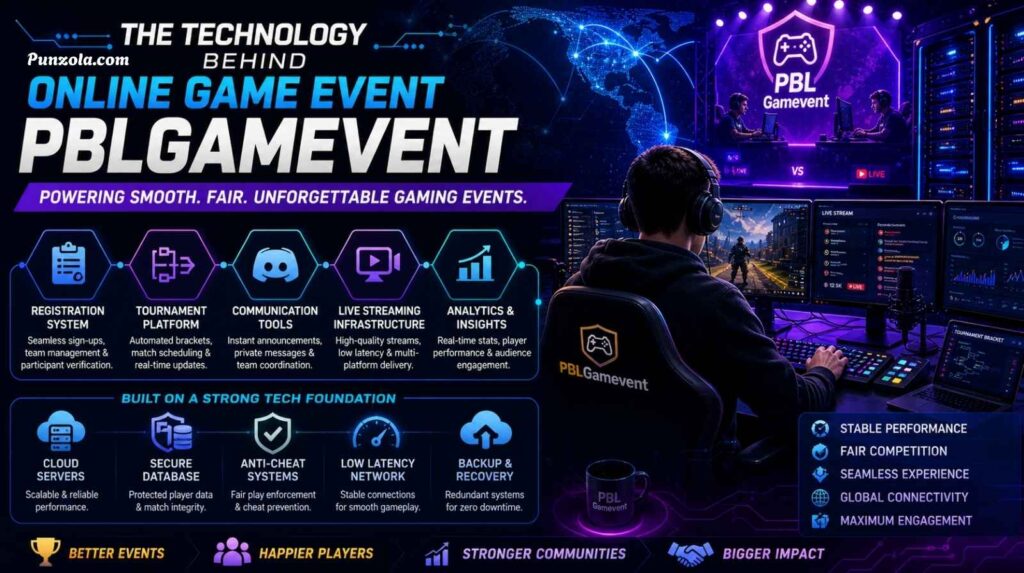
Modern online game event pblgamevent relies on several connected systems.
Registration platforms manage signups and attendance.
Tournament tools handle brackets, score reporting, and match progression.
Communication platforms such as Discord and email support announcements, updates, and player support.
Broadcast tools manage overlays, capture feeds, and live production.
Analytics platforms help organizers measure registrations, watch time, audience retention, and engagement.
Technology now forms the backbone of event coordination in gaming.
When one system fails, everything feels slower.
Why Technical Infrastructure Matters
Technical reliability often determines whether a gaming event feels professional.
Players rarely praise stable infrastructure because they expect it. They immediately notice when it breaks.
A solid event usually includes stable internet connectivity, backup communication channels, failover procedures, and tested platform integrations.
Common technical issues still appear. Internet problems, connection delays, platform outages, and score synchronization failures remain common.
Professional hosts plan for those scenarios before launch.
That preparation often separates smooth events from stressful ones.
What Happens Before Launch Day
A surprising amount of event quality comes from preparation.
Before the event begins, staff usually review roles and escalation paths. Everyone should know who handles disputes, late check-ins, technical failures, and communication approvals.
Technical rehearsals matter too.
Organizers test registration flow, lobby creation, score entry, stream transitions, and admin permissions. These rehearsals often reveal hidden weaknesses.
Communication planning also happens before launch. Delay notices, check-in reminders, and support instructions are usually prepared in advance.
Good preparation reduces panic later.
What Happens During the Live Event
Once the event goes live, timing becomes critical.
Players check in first. That confirms attendance and helps prevent empty brackets.
Admins then launch matches and monitor progression. They handle no-shows, timing issues, score confirmation, and bracket advancement.
During live play, clear communication matters constantly. Players should always know where to report, when to play, and who handles problems.
Moderators keep community channels healthy. They manage spam, harassment, conflict, and rule violations.
Meanwhile, production teams keep broadcasts moving. They coordinate featured matches, commentary timing, sponsor integrations, and scene transitions.
Live operations often feel calm to viewers.
Behind the scenes, they move fast.
Match Management and Score Tracking
A tournament depends on reliable match management.
Every round requires readiness checks, lobby coordination, score verification, and progression confirmation.
Even small score mistakes can create major frustration.
That is why many organizers require screenshot proof, dual confirmation from both players, or admin validation in disputed cases.
Most tournaments use familiar formats like best-of-one, best-of-three, or best-of-five.
The scoring model depends on match length, competitive stakes, and schedule constraints.
Good score tracking builds trust.
Communication Is Often the Difference Between Success and Failure
Many event problems do not begin with technical failure.
They begin with poor communication.
Unclear check-in times, vague rule explanations, delayed support responses, and confusing instructions can frustrate players quickly.
Strong communication is simple. It is fast, direct, predictable, and easy to understand.
Good organizers often overcommunicate early because they know silence creates uncertainty.
In a live competitive gaming environment, clarity matters.
Sponsorship and Commercial Structure
Modern gaming event hosting guide strategy increasingly includes sponsorship.
Sponsors do not simply want logos on a stream. They want measurable value.
That may include audience impressions, viewer retention, branded engagement, social media reach, and community participation.
Better sponsor integration feels natural. It may appear in analyst desk segments, challenge rounds, community activations, or creator coverage.
Forced placements usually feel awkward.
Smart integration feels part of the experience.
Measuring Success After the Event
The event does not end when the final match ends.
Good organizers study results carefully.
They review registration numbers, attendance conversion, bracket completion rates, support response time, technical incident count, and repeat participation.
Audience-side analysis also matters. Peak concurrent viewers, average watch time, clip shares, and chat activity reveal how well the event connected with spectators.
That information shapes the next event.
Strong hosts treat every tournament as a learning cycle.
Read More: Minecraft PlayBattleSquare: Tips, Tricks, and Community Fun (Complete Guide 2026)
Common Challenges in Hosted Event PBLGamevent
Every organizer eventually encounters friction.
Scheduling conflicts are common, especially with global participation. A time that feels convenient in one region may create problems in another.
Rule violations also appear. Account sharing, late reporting, unsportsmanlike behavior, and roster issues are regular challenges.
Technical barriers remain part of the landscape too. Local internet instability, hardware failures, patch updates, and connection quality still affect live play.
Communication barriers can also create pressure. Regional language differences and community expectations sometimes require extra planning.
The key is not eliminating every problem.
The real goal is responding well.
Why Gaming Events Build Strong Communities
A good event does more than crown a winner.
It creates shared experience.
That is one reason gaming community culture remains powerful. Players often return because they remember the people, the atmosphere, and the excitement.
Gaming events support networking, friendship building, teamwork, cooperation, and community building.
A player may lose early and still leave feeling connected.
That matters.
Player Growth and Skill Development
Well-run tournaments also help players improve.
Competitive pressure teaches lessons casual play often cannot.
Players learn pacing, adaptation, communication, strategic decision-making, and performance under stress.
That creates real skill development.
Over time, players often improve in problem-solving skills, player performance, and confidence building.
Even smaller community events can become valuable training environments.
The Future of The Online Gaming Event PBLGamevent
Gaming events are still evolving.
Automation is becoming more common. Registration reminders, bracket generation, check-ins, and scheduling alerts increasingly happen automatically.
Analytics are becoming more sophisticated too. Organizers now use participation data and audience behavior to improve future design.
Hybrid models continue growing. Many events now combine online qualifiers with offline finals, creator coverage, and live audience elements.
That structure expands accessibility while preserving spectacle.
The future of the online gaming event pblgamevent looks increasingly global, data-informed, and community-driven.
Final Thoughts
A successful Hosted Event PBLGamevent rarely looks dramatic from the outside.
That is usually a good sign.
When players can focus on playing, when spectators can focus on watching, and when problems are solved quickly, the event feels effortless.
That smooth experience is not luck.
It comes from careful event planning, strong event organization, tested systems, reliable communication, and disciplined live operations.
The best gaming events are not remembered because everything went perfectly.
They are remembered because people trusted the people running them.
And in 2026, that trust matters more than ever.
Read more knowledgeable blogs on Pun Zola

Jackson Pearson is a creative humor writer known for crafting clever puns and clean, engaging jokes. Through his blog, he brings lighthearted fun to everyday life, offering readers smart wordplay, relatable humor, and a warm, welcoming voice that makes each visit enjoyable.